Wednesday, 22 February 2017

Gummo (1997)


Gummo is a beautiful film about; memory, identity, perception, loss, and a seemingly chaotic but completely harmonious life, rather both.  The film begins and ends with the image of a tornado.  In the opening Solomon talks about "the great tornado" and how "houses were split open and you could seen necklaces hanging from branches of trees."  "I saw a girl fly through the sky, and I looked up her skirt."  These simple lines tell what Gummo is about.  The veil is lifted and things are no longer grounded and concrete, and we can see what we couldn't see before.  Houses are no longer enclosed dwellings, and nothing is separate, objects and the memories and ideas attached to them have become scattered and thrown together in the fierce wind and the light.  People seem free-er and looser but if anything it is a tighter community, with no boundaries of taste.  The order of things no longer seems continual, and the way things were before is told through abstract, random sentences that tell themselves.

"My dad was mugged on Martin Luther King jr. day.  For the rest of his days, my dad never celebrated this holiday."  Solomon shows how people are defined by the experiences they've had and how identity is shaped, any other day wouldn't have made a difference but for the name "Martin Luther King jr."  Similarly at the end of the film, even more explanatory, the retarded lady with the baby dolls lies in bed and sings "yes jesus loves me, yes jesus loves me, yes jesus loves me, for the bible tells me so."  There is no clever little irony here or in the way it is presented, she is stating that jesus loves her because the bible tells her so and that's her truth.  Everyone has their own truth in this film which they are confined to and tell, but which all seems to add up to the same thing, it's just that the names and labels are all different.  The tornado that split the house open has mixed everything up so everything seems to join together.  Throughout the film Tummler and Solomon search the debris filled town for the last remnant of the old life.  "Dogs died, cats died."  The cat is a wandering animal by nature, and they hunt stray cats for money to fund their glue sniffing habit.  The last house cat "Foot Foot," has gone missing, and three girls go searching for it between tying tape to their nipples for a "better nipple" which could almost be some bad parody of an advert, talking to some boy who has ADD, and who was saved by ADD, as before he knew he had ADD he thought there was something wrong with him and lacked self-esteem and wouldn't go the extra mile.  In the term ADD he found his truth and the drug ritalin is his sacrament.  In the search for cats, the two boys come across a competitor, a cross-dresser who takes care of his granny.  After soliciting the services of a down's syndrome prostitute, for some last comfort, they find the rival's cat traps near a power station and unamused with the loss of the cats that feed their cheap glue-fuelled euphoria they break into the tranny's house, and discover, among other things, his granny, a vegetable kept alive on a life support machine.  The tranny has to clean up around her, which he hates.  Discovering the problem, the cause Jarrod's problems and the subsequent cat shortage because of his need to kill cats, they switch off the machine, because it is a lie, and she is no longer alive inside.  Balance is soon restored when the rain washes it all clean.

Throughout the film are seemingly random but actually very deliberate images.  The boy in the bunny ears with the skateboard rides down hill with arms outstretched, in the middle of the film, whereas once he kicked impotently at the stream of traffic on the freeway against the metal cage of the overpass.  At one  point he plays chords over and over on an accordian painted in blue and red, in the stall of a bathroom among empty stalls as the camera panned over them.  And that's it really, just playing the same chords over and over in a bathroom stall.  Like all great films it works both literally and metaphorically, the difference no longer relevant.  The characters are all symbolic entities of the same thing, but are still characters and real people.  Characters have their own way of communicating with one another.  A couple in the bowling alley scream and yelp at each other like animals.  In another scene Solomon has a bath and eats dinner at the same time (everything in the film makes less sense within the boundaries of taste, yet is strangely more practical), eating a chocolate bar and spaghetti at the same time in dirty water.  His hair is shampooed up into a point, which bends and falls as it does.  In the final scene, the rain finally falls to Roy Orbision's "Crying" and as the last house cat is killed Tummler and Solomon finally accept, and the dead house-cat is held up to the camera by Bunny-boy in a final gesture to show that it is finally dead, then finally back to the tornado, and in the end all is put back together again and this Xenia is just a dream.

There is no real violence in the film.  There is nothing mean or sadistic.  The only violence of the film is the two skinhead brothers brawling in the kitchen, and even that is just mutual play, and a demonstration of the primal, raw feeling behind everyday life, as Solomon tells us about the two boys who had perfect, clicked back hair, perfectly brushed teeth and were always smart, who killed their parents, and that he didn't know what went wrong.  It's merely what is behind the person, and everyone is without that, but also within it.

Saturday, 11 February 2017

Wild At Heart (1990)

Unique film in Lynch's work. It's about good triumphing over the forces of evil, or good surviving in an entire world of evil, two innocent free spirits surrounded by equal part oddball freaks, equal part evil psychos who have their own systems of perversion, like getting of on a countdown to a guy's execution. The violence is hilarious and cartoonish. There are lot of seemingly throwaway, trashy scenes like an underrage rape and an abortion and it all ties together, it's film as a dream and all the violence and trauma is like a cartoon to the heroes and they just get on with it. Full of life and free, this film does not give a f--k and I love the excessive violence and acting, it's full of awesome, powerful scenes that are both affecting and hilarious at the same time, like the car crash girl going on about losing her wallet with her cards in it before dying. A lot of the characters seem consumed in loops and obsess over material possession for it's own sake, like Lula's evil mom wants to possess her. Also in the last act Sailor is tricked in desperation by the awesome Bobby Peru into committing armed robbery to get money when he finds out Lula's pregnant, and pays for it, but love prevails even in a world half ruled by rape, money and violence. In one scene 00 Spool tells them about his dog, and observes that they picture his dog even though he hasn't told them the "type" of dog, and show show they're still alive inside. A lot of the characters are so cartoonish and stylish they seem like objects. Amazing performances too. Best love story ever put on film. THIS is cinema.


Wednesday, 8 February 2017

Journey Into Fear (1943)

Orson Welles and Joseph Cotton made several great films together through the 40s/50s one of which is the overlooked Journey Into Fear.  It is a kind of surreal, absurdist thriller about war, identity and the stripping away of identity that turns a cowardly man in denial into a soldier...of sorts.  Howard Graham very deliberately goes to Turkey with his wife so he can be tied to an X by a magician and have an attempt made on his life, which kills the magician and sends him into hiding on a boat on its way to the mainland.  All the while he maintains the disguise of being the victim and of not wanting to get involved and of being just a businessman with no part in the war, despite being a representative of a munitions company.  His wife is sent to take the train while he must be separated from her and sent adrift on the boat.  This tale is very cleverly disguised in a World War 2 story but still works on both levels.

Everyone knows what Graham denies himself.  The Colonel who sends him away on the boat can see right through him and knowingly comments on his choice to arm himself.  I find these moments funny, such as Graham clearly immersing himself in the role in private with his revolver in his cabin, clearly relishing the freedom.  Everyone on the boat can see right through him, and they all appear to be stuck in their own reverie or loop, otherwise in the case of the Captain they just laugh at him as he impotently whines that there's a man on the boat trying to kill him and mock his false pleas.  In one brilliant scene a tobacco salesman explains how he was scolded by his wife for making remarks and talking nonsense as if he were a mere worker, which he is at heart, then says he gained freedom at home by threatening to do so again.  Like Graham, he overstepped his bounds and by doing so overcame his fear and now lives comfortably in illusion.  I could go into it further, but this film is not so overt in the way it expresses its ideas so it would take longer, whereas a different kind of film like say, Metropolis, makes it very easy as the images speak for themselves, but that is a different film from a different era and being a genre film Journey Into Fear must be disguised in order to sell itself.  In another scene another liberated soul gazes out to the sky and asks "what is better, to see the land from a ship, or a ship from the land?," and comes to the conclusion that he dislikes both and so takes simple comfort merely from the respiratory system that keeps him alive, another experienced man who has been liberated through time and lives a glad life dreaming aboard the boat.  While they all talk of the war and its folly and how terrible it is (really the inner war of Mr. Graham), one man, a businessman, gets up and says that "war is bad for business," and it is as it seems to contradict the flow of events and cause the individual confusion.

Mr. Graham, in the letter he is writing through the film from its end, apologises to his wife for hooking up with a dancing girl on the boat he met in a club at the start of the film.  She tags along with him but he just uses her as a comfort as he faces his fear of death and of his own doubt.  Finally he is confronted by the man who has hired the assassin to kill him in his cabin, who has his gun aimed at him and bluntly tells him that he lucky because he is going to catch Typhus.  Rightfully confused by this statement and by Muller's half assed plan he seeks to finally do something about it and when they get off the ship and he is held in a car, he disables the driver and crashes the car before reuniting with the dancer girl and his wife at a hotel, where the Colonel is also waiting.  In the final showdown, on a precarious ledge high up in the pouring rain, he is finally forced into action when the Colonel, his uniformed "Turkish" protector is shot and falls back through the glass into one of the rooms, and he finally accepts his role and kills his would-be assassin.  There are two different versions of the film, one with a great ending, one with a not-so-good ending.  One version has his wife call up to him that he'll "catch his death of cold," and then it just ends, and the better version has him finish the letter he's been recounting the events of the film in only to scrap his version and walk through the doors to his newfound courage and freedom.  Thankfully the bad ending is just on the TV version.

Tuesday, 7 February 2017

A note on the closure of the IMDb message boards


For about seven years or so I frequented many boards on IMDb, but mainly Film General.  It was one half a films board, that is about films, with titles, and genre tags and whatnot, the other half a film board, that is a community of users from the film of life who shared their opinions and ideas on anything and everything.  It truly was "film general," despite the the indignation of certain stiff users who could not accept the trolling that became more and more frequent on the board.  The trolling was the best on the internet, in that it was actually amusing and often well hidden, with numerous personas and characters provoking and entertaining with ridiculous and absurd opinions.  Later on, the board became infested with pornographic spam posts, doxxing, and call out threads.  Again harmless stuff, but also easily avoidable with the use of the ignore button, the endlessly cloning troll accounts a mere inconvenience to those who did not wish to indulge them.  The board was also host to many great discussions through the years.  It was fun.  That is all.  

RIP IMDb message boards.  Good riddance Benman.  

Monday, 6 February 2017

Metropolis (1927) (spoiler warning, but who cares anyway it's the experience that matters)


Much of what follow describes what happens in the film in order but I hope the way I've written it provides some insight into what I found in the film.  Also don't read this if you don't enjoy long rambling analytical text.  I've tried to be as concise as I can.  

Metropolis is about the city of the psyche.  It's a great film so dense with ideas it'll be hard to fit everything into a mere review, but I'll say as much as I can.  It's about the psyche of the mind and of society and the disintegration, separation, and rebirth of this city, which is divided into three levels, an intricate, perfect utopia on the surface and an industrial machine city below.  The surface level is one of luxury, freedom, games, culture, recreation and fancy.  It is here that Joh Frederson's son Freder lives a carefree life.  In the middle of a fling with a woman a set of doors open and he is confronted by a woman, Maria, surrounded by poor, ragged children, who tells him "Freder, these are your brothers and sisters."  Struck by this and bewitched, Freder decides to go searching for her, and this is what happens when he does.  


He finds himself in the machine city below, in which there is no luxury and no freedom and workers are trapped in bondage machines which they work with tirelessly and without rest.  Freder is shocked by what he witnesses, and there is an explosion, as these workers are tied together and marched into the mouth of of some entity named "MOLOCH."  He confronts his father about the explosion, and his father asks why he heard this news from his son and not his employee, Josaphat.  Josaphat has no answer.  Then Grot, the boss of the workers below, who is in charge of the heart M-machine of Metropolis, shows Joh a pair of plans of the machines he found on two workers below.  This represents awareness, the workers become aware of the machines they are in bondage to, and subsequently these plans are brought up to Joh by Grot, and he is made aware of this, as is his son.  Joh, perturbed by the news, again asks why he was informed by Grot, and not by his employee Josaphat.  Josaphat seems to represent a kind of spare part, or proxy figure to Joh, whom relays information to Joh, and his failure to relay information and the question as to why is part of the chaos, seeming malfunction and separation of the psyche and the city of Metropolis that follows. 


From this point everything becomes thrown apart in chaos.  Josaphat is fired, and becomes spare and without purpose (which should be impossible in a perfectly running utopia).  Beginning his role as a mediator and taking responsibility for the first time, Freder, who cannot make sense of Josaphat the information relay being fired, employs him and tells him to wait at his apartment.  Freder goes deeper into the machine city, first relieving a worker of his responsibility in bondage to a clock-like machine and taking his place while further chaos ensues as the worker finds himself giving into temptation and decadence, and then below into the depths of the caverns and finds the girl he was looking for, Maria, who is worshipped by the workers as a saint.  What follows is the story of the city of Babel, a sort of mini-film within the film which describes the film perfectly, and yet is also a story told within the depths of the psyche to warn of disaster, still just another mechanism to keep it all running.  Workers are employed to build the tower of Babel, a perfect city, and they do so, and it stands, but as the intertitle describes perfectly - 

But the minds that had conceived the Tower of Babel could not build it. The task was too great. So they hired hands for wages. But the hands that built the Tower of Babel knew nothing of the dream of the brain that had conceived it. BABEL. BABEL. BABEL. BABEL. One man's hymns of praise became other men's curses. People spoke the same language, but could not understand each other...


This is an illusory self telling story that describes the folly of mind control, and subsequently the structure that only collapses from this foundation.  The psyche ends up at war with itself through fatal misunderstanding and it collapses in the face of the creator and.  It is an illusion but also just as real as the rest of the machinery of Metropolis, an idea that does not make sense and is self-defeating but when discovered and read keeps the psyche in check.

Next comes the inventor, Rotwang, who lives in an old, out-of-place house that seems to belong in another age.  Joh Fredereson sees Rotwang for advice, and laments the death of his wife, who died giving birth to Freder.  Although the film seems to follow a linear narrative (impossible to do it any other way, even altering the order of events appears linear in a way), it happens out of time, and therefore the loss of Joh's wife, or the female element of his psyche, or his freedom represented as a female, has happened and has yet to happen as everything in the film is.  A statue has been made of her and kept in the inventor's house.  Frederson, having learned of the woman in the depths who is worshipped as a saint and who he sees as a disruptive influence, seeks to shift the balance of power by tarnishing her image and depicting her as the opposite, he seeks to devilise her, and the inventor then reveals to him a cybernetic being he has created, who sits under an inverted pentagram, the naked representation of evil mind control, a being seemingly created by the will of an individual mind alone, but a necessary evil in this story, a scapegoat and last ditch attempt to seize control which will go fatally wrong and prove itself false and powerless despite it's seductive allure.  The "real" Maria is cornered and trapped in the caverns by the inventor, who captures her.  This is when the female and male is separated.  She is captured and taken away, and one door opens for the inventor and the last closes for Freder and they are rendered helpless.  She finds herself at his mercy, and displays fear and revulsion as the inventor says he wants to take her face and put it on the robot.  The loss of individuality and persona to a machine is horrifying.


In the mix is a seemingly disruptive influence in the form of "the thin man," another attempt at control and subterfuge by Joh Frederson.  The false Maria begins rallying the workers in a revolt against the machines, while distracting the priveliged bourgeoisie with her charms and with a very revealing outfit that is like a large circle with multiple spokes protruding from it.  Sexually charged and blinded by the possibilities on offer, they go mad for her.  The imagery here is perfect, the wild and raving men lusting for her transform into a set of multiple eyes, disjointed and staring.


In the finale, she leads the revolt against the machines, and the machine city is flooded, and Freder and Josaphat escape and save the children from drowning, while Grot saves the M-machine just in time.  This is another way in which Joh Frederson's grab at power turns on him fatally.  Having seen the destruction they were led to by the false Maria, they flock to her with pitchforks to burn the witch as she finally serves her purpose as scapegoat and her cackling, maniacal persona is revealed as an illusion as the fire strips her to her cybernetic circuitry.  Horrified at the revelation, they try to attack Joh Frederson, but are held at bay.  The inventor tries to take the real Maria as his own, having been so proud of his created Maria.  He takes her to the roof of a building and onto a precarious ledge ornamented with devilish gargoyles.  Freder gives chase and attempts to stop the inventor, as Joh Frederson is finally forced to kneel amidst the total chaos, after all of his plans crumbled around him, his hands clasping his scalp, his expression one of fear and horror.  Finally the trickster inventor falls and Freder and Maria, male and female, are reunited and embrace once more.


At last peace as always is restored and the psyche is reborn whole and without the demonic power lust that seemed to possess it in the form of the trickster inventor and his satanic creation.  The psyche is made whole by it's own power, and not that of Joh Frederson or the egoic inventor.  As Grot, the man of the heart, and Joh Frederson, the man of the mind, are re-united by Freder, it reads "the heart must be the mediator between the mind and the hands," rather than Maria's false, but necessary teaching "the hands must be the mediator between the heart and the mind" which led to the telling of this tale in the first place.

Not really a "review" as such but I've tried to describe the events and tie them to what I believe are the ideas of this film logically, and I feel this film follows an ingenious, impeccable logic, although the film of course has to be seen, experienced and above all enjoyed, and it is one of the most entertaining films ever made, and a great story no matter what way you read it.  The photography and set design is beautiful, futuristic and industrial, this film pulls you in and never lets go.  The music too, by Gottfried Huppertz, is awesome and goes with it perfectly.  One of my favourite films.  


Sunday, 1 January 2017

Muriel's Wedding (1994)


Muriel's wedding is a sham, a staged, set up display designed to further the false goals and aspirations of a sad group of people so enamoured with winning and getting ahead that they forget to care.  In the beginning of the film Muriel is a down-and-out unemployed girl with no self-esteem who is constantly belittled by everyone around her, so she feels the need to act out, lying and stealing to live the ideal of a life she sees her peers living and appease her greedy, success obsessed father.  Eventually she meets a friend from school and they move in together and they think they're free but things go wrong again and her friend his rendered paraplegic due to a tumor in her spine.  Another blow and Muriel, ever desperate to live up to the idea of success, sees it in marriage, her new ultimate goal, overlooking her friend in favour of a phoney wedding to a professional swimmer so he can get citizenship because she's so desperate to be somebody and feels as if she has nothing, when she always had all she ever needed but was blind to it and had to learn through the suicide of her long suffering mother who always stood by her and believed in her no matter what but was ignored at the wedding as she grinned for the cameras.

Muriel's Wedding is a great film because unlike other "cinderella stories" this completely subverts that idea and dodges every cliche because it's not about success, it's about failure, or the failure in success.  In the end Muriel and her friend finally break free of it and ride off to live together but they don't really gain anything, they simply accept themselves and give up.  Most of the characters end up worse off than they began, and while portrayed comically, none of them are villains, and instead all seem just as sad and desperate as Muriel, her thieving, lying timidity just a symptom of the bind denial that afflicts them all.  Her father is an abusive, greedy, status obsessed businessman who tries repeatedly to run for governor, her siblings all sit around watching TV and doing nothing, her peers are all image and sex obsessed bitches and her mother, plain, simple and wanting for nothing, is caught in the middle of it all and when her own daughter ignores her because it she eventually has enough and self-destructs.  He leaves her for some glamorous, well-to-do woman he keeps meeting "coincidentally," and she's in just as much of a prison as the rest, who all need to make noise and shout about how great they are by the standards of a sick society that seems so loud and purposeful and keeps grabbing and taunting but is only an outward symptom of self-hatred.  

It's a great film, full of great characters and the ABBA soundtrack compliments it wonderfully.  Toni Colette is excellent as Muriel and the whole cast is great.

Wednesday, 7 December 2016

Star Trek: Deep Space Nine pilot episode (1993) (some spoilers)


I'm an avid fan of Star Trek TNG, and while it's a great series, it's far from perfect, often preachy and pandering but with a perfect send-off in all good things, a time jumping episode in which Picard is forced to give himself up and conform to a truth in order so that humanity and all that he loves does not cease to ever have existed, the ultimate sacrifice, leaving Star Trek Deep Space Nine to take the franchise and the ideas of the series so far further into the realm of the metaphysical, and Deep Space Nine is a marvel with great characters and ideas that explores ideas of faith, time, conflict and power on a galactic scale but all aboard one station under the command of Benjamin Sisko, the Emissary of the Prophets, a race of god-like being who exist beyond humanoid perception of time and space.
The whole pilot episode is about time and timelessness and the contradictory nature of time-continuing existence existing within timelessness and destiny, and the tightrope of faith.  Whereas the Enterprise is a perfectly oiled machine and the whole crew is pretty much perfect and know how to overcome all obstacles in a rigid, literary surface sense, Deep Space Nine is a broken space station abandoned and left in pieces by a totalitarian race of control freaks who oppressed the people of Bajor and committed atrocities against them for an era.  When they leave and Bajor is "free" under a provisional government, Starfleet steps in to help out and Benjamin Sisko reluctantly takes command of the station having lost his wife at the battle of Wolf 359 seen in TNG in which Picard was assimilated by the Borg and forced to assist them in an assault on Earth.  Therefore Sisko starts out with a resentment and hatred of his predecessor in the Trek story.  The way the pilot works as a continuation of the ideas explored in the best episodes of TNG, the final episode as well as the brilliant two parter in which Picard is assimilated, is poetic in the way it comes together and adds up as a profound demonstration.

As Sisko reluctantly arrives on the station struggling to deal with loss and carrying the baggage of hatred and resentment for the previous Captain incarnation of Picard, he unwittingly sets the stage for what is to come and puts the pieces in place.  As the episode begins it is far more of a slow burner, more mysterious and mystical than the fantastical and adventurous pilot of TNG, for this is a very different show and no one is eager or agreeable, every first encounter an argument or confrontation rather than a reunion or instant friendship, at least not on the surface, for these characters thrive on conflict, uncertainty and doubt, instead of the outward goodness and purity of the Enterprise crew, although that worked for a show that had only a partially continuing story but was for the most part an adventure of the week kind of thing.  Rather by having a continuing story the show unfolds and suprises you and tries the faith of its characters whose struggle is compelling and difficult but fits in place in a larger picture.  In this way the show combines religion and science as its foundation and achieves a grander scope than its predecessors.

In TNG's brilliant two-parter "The Best of Both Worlds," aptly titled as it explores the illusory conflict between the surface reality of culture, personality and freedom and the underlying cybernetic control structure which assimilates Picard in servitude to them as humanity is forced to fight in order to save their freedom.  In the beginning of Deep Space Nine Sisko is aboard one of the ships assaulting the Borg cube.  The ship is catches fire and begins to break up and in in the chaos Sisko loses his wife but saves his child.  This loss leaves him hardened but better for it, and three years later he is assigned to oversee the station as Bajor recovers from the occupation of a controlling occupying force similar to the Borg but less absolute and more reptilian and sadistic, a kind of lingering disruptive presence throughout the series, powerful but also deluded and arrogant,their rigid control and domination their downfall as with the Dominion allies later in the series.  Deep Space Nine is very much about power play both real and illusory.  As I've mentioned before there are races of varying levels of technological advancement and power in the Star Trek universe.  The systems at the higher end of the spectrum like the Dominion and moreso the Borg tend to be more rigidly controlling, systematic, invasive and powerful, or seem so, assimilating other cultures and civilisations or assimilating them so the Federation and Bajorans have to take leaps of faith and accept and overcome their flaws in the face of the ultimate power, the beings the Bajorans worship as gods, the prophets, which speak to Sisko after giving him his test in the pilot.

At some point Sisko and Dax get in a runabout to investigate anomalous readings in an attempt to find out more about mysterious orbs that have appeared in the skies above Bajor for millenia.  Suddenly in the same way a Bajoran pilot once described the heavens open up and swallow them, and they are sucked into a wormhole a folding of time and space, the celestial temple of the prophets in which they reside beyond time forever.  It is here that Sisko's time continuing existence is tested, and as he explains how he goes from one moment to the next in life as a human being, is is thrust into different meaningful events in his life, back and forth between meeting his wife, the death of his wife at Wolf 359 and playing baseball.  The prophets speak to him through figures from his life, from Picard, who in one shot appropriately as a borg stands alongside Sisko as the prophets deconstruct from within the mechanics that get Sisko from one point in time to the next, Sisko struggling to explain that he moves forward in time while he is repeatedly thrust back into the moment his wife died with the ultimatum from the prophets "but you also exist here."  They are learning one another in order for Sisko to become the emissary.  His being is deemed intrusive to them for trying to explain how he moves and how things are lost and his mortality, but as the prophets learn this Sisko also learns of timeless existence, of destiny, and so they are bonded forever by this and Sisko returns from his experience renewed as the emissary.  

At the same time the demonstration is taking place in the temple it is also happening on Deep Space Nine as the crew races against time to stop the Cardassians from staking a claim to the wormhole.  The tension lies in the fact that the station is barely functional and could tear apart at any moment, and the crew has to rely on blind faith to get them from point A to B.  At one point O'Brien tries desperately to get a computer console working before literally kicking it into action.  Everything seems to just happen instead of being controlled completely by the crew and as Sisko returns triumphant Deep Space Nine begins.  My favourite Trek series, fascinating.  


Monday, 5 December 2016

Die Hard (1990)


Die Hard is not only one of the best action films ever made, it's also a brilliant film of ideas, the skyscraper the setting for a climactic confrontation, the psyche of one out-of-place, everyday man who against the odds must reconcile with his estranged wife and defeat the evil Hans Gruber, a pretentious, materialistic thief and control freak.  When he invades the Nakatomi skyscraper it's time for John McClane to clean house, which he struggles to do but does so effortlessly in the fashion of the old action films which were less shallow and aesthetic, vulnerability and danger part of the equation rather than dispatching enemies with precision, dodging bullets and being a literal god-man.  There is no room for any of that in this film, John McClane is not a pretentious, insecure show-off like his nemesis Gruber who has to make big speeches and surround himself with a band of strongmen to get by, all that nonsense does is force him to rely on instinct and do what is absolutely necessary even if it means bombing out the building with C4.  He has no time, Gruber believes he has all the time in the world, and this is why Gruber, with his fancy suit and fancy watch, fails.  After rescuing the hostages and killing the terrorists he is forced into confrontation with Gruber who is  holding his wife hostage.  The final confrontation is brilliant, as Gruber is blown back out a window.  McClane's wife tries to save him, and is frantically holding onto the fancy watch, while McClane unbuckles it because Gruber must die.  Finally Gruber, out of time, his watch unfastened, falls, defeated all along by his own sense of himself as an autonomous, all-powerful mastermind with time in his hands, which he never was, and McClane and his wife, the male and female counterparts are reunited as the snow falls and Merry Christmas.  That is why it is not only a great action film, but a great Christmas film, and a great ideas film, and the same can be said for number 2 and Die Hard with a Vengeance.  Like many great films it's just another trip into the depths, into the infrastructure.  Blue Thunder is another film that comes to mind that does something similar.  

Wednesday, 27 July 2016

Die Hard 2 (1990)

A plane full of people blowing up is awesome.  9/11 ruined Hollywood action films because everyone became "sensitive" about it, when in fact watching anything blow up in a film, whether it's a building or a plane or a truck, is fucking great.  I mean even for 1990, when action films were really, really great, like Total Recall, a plane full of people blowing up, over time on the screen as it smashed to the ground was actually pretty heavy stuff.  The first Die Hard had nothing so catastrophic.  The film ends happily with snow and a nice christmas song despite the mass murder, so it's all good.

Fun film, just as good as the first Die Hard.  The villain is not so memorable, but the guns shoot and the plane blows up and John McClane is right when the fat stupid cop says he's wrong and he kills the terrorists and shows them all and wins.  I also like planes and airports, so that just makes the film even cooler.

Monday, 25 July 2016

Ride The High Country (1962)

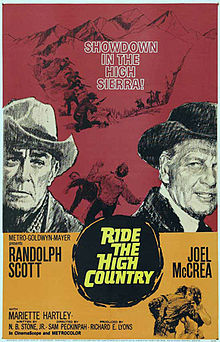
One of my favourite westerns.  Pine trees, mountains, Warren Oates, gun fights, great score, Joel McCrea, Randolph Scott, all mountains, raven, drink, gold mine, what a film, Heck Longtree don't stop at talkin.'

Sunday, 24 July 2016

Mulholland Drive (2001) (spoilers)


Like Eraserhead, Mulholland Drive is a film about the creative process, although altogether different.  It's the best film I've ever seen along with Blue Velvet (tonally and stylistically quite different).  There's a lot to write about, but I'll try to be to the point.  Like Blue Velvet it's about the inner life of one being, Diane Selwyn, her waking life manifest in her subconscious and vice versa when she awakens (reawakens?).  I say that because I think the film implies that her "dream" (film really draws no line and there is none) is no less real and exists in eternity, despite being forgotten in her perceived waking state amid the destructive influence of the Hollywood film industry, which in her dreaming ideal really is a place of dreams in which her creativity and inquisitiveness flourishes against the odds, as opposed to the stifling, closed off den of prostitution we see once the key turns and she "awakens."  So if one were to put it in narrative order, Diane Selwyn went to Hollywood with dreams of becoming an actress, fell in love with and became obsessed with the ideal of the voluptuous, sultry film star Rita that she aspired to be and wished to possess (who she is also in a lesbian love affair with).  Diane hasn't much of an image, as she lacks charisma and is very confused and lost, but lives a rich inner life and has a great creative centre, which is the source of the great mystery dream that takes up most of the film, in which she is Betty, a bright, charismatic, confident newcomer, and Rita is an amnesiac who has been in a car accident who stumbles into Betty's new apartment.  The two form a bond and Betty tries to help her discover her identity.  In this state Rita as objectified in Diane's mind is totally at the suggestion and the mercy of Betty, Diane's sort of perfect inner-witch, who gradually moulds "Rita" into her own image.  This dream also follows the story of Adam Kesher, a hot shot young film director who is making some kind of weird 50s hot rod musical, but finds himself struggling not to sell out to the studio bosses under the influence of the mafia and their own falsely enthroned egos which are concealed without oxygen behind a glass case as a dwarf and a bodyguard.  It's the destructive process of Hollywood shown as a shadowy, secretive cabal of indecisive, crawling executives.

As Betty arrives in Hollywood with what I presume are her grandparents, leading her unwittingly to her doom, she is all confidence and smiles, completely hypnotised.  Unbeknown to her, she is being led on by the hidden hypnotist of her own psyche and her experience is her mind revealing itself to itself.  Things take a turn for the strange when she discovers amnesiac Rita in her apartment, who had just stumbled down from Mulholland Drive after a car accident in the night after stopping on the road.  A shell without an identity, Betty tries to discover one for her.  Rita is sort of like a sexualized imaginary friend to her, a real body but without an identity, leading Diane's psyche to become a sort of puzzle.  In one nightmare scene in the film, a man talks with his therapist in a diner about a dream he's had in which he finds a man in the back of the place who is causing all the fear he and his friend feel, and that everyone feels, a sort of malevolent force hidden and revealed without warning but ever present.  He goes out back to show his friend, who catches him as he falls from the fright of his encounter.  It's a sort of demonstration of the way fear reveals itself to us suddenly and without will, and how we are saved and returned.  He goes outside  Betty has to go to an audition for a second rate film produced by some guy named Wally.  The director is a half asleep hack who tells her and some old actor to "be with themselves, but not let it get real until it gets real."  This sounds like pretentious crap but has a ring of truth to it.  When she starts reading the lines, she automatically lets herself go and inhabits the role totally, in turn hypnotising the old Clint Eastwood looking guy, who himself turns in a natural, real performance.  I guess this goes to show that "acting" is just as real as anything else, a sort of mutual unconscious hypnosis that happens without resistance, hampered only by distraction and self-consciousness.  Having turned in the performance of her life she is quickly snatched by two "catty" casting people, who are quick to package the performance and make a "star" of it, by taking her to the studio where Adam Kesher is working on his...50s musical...thing auditions, where plastic looking girls and minstrels in frocks are singing 50s tunes.  Having arrived she immediately makes eye contact with Adam and the two connect as if by force, but Adam must sell out lest his life go to hell (a cowboy tells him he will have the "good things in life" if he casts a certain girl).  When he sees this girl audition, he reluctantly casts her in the part because he is forced to by the company boss and his shadowy conspirators.  Essentially he sells out and loses his best actress.  Betty and "Rita" continue to investigate her missing identity, going to the apartment of Diane Selwyn, a name they heard earlier, only to find her decomposing corpse lying on the bed.  This is Diane rotting away as she has this dream by what has happened to her in her "reality."  "Rita" runs out in shock and horror with her hands to her face, fading in and out of traces of herself while Betty reassures her.

Later that night, Betty alters "Rita'" and gives her a blonde wig and makes her look "different," but actually more like Betty.  She is moulding her in her own image.  They fall in love and end up making passionate lesbian sex together, but "Rita" senses something is not quite right, so she leads Diane in the middle of the night to some mystery club called "Silencio," which it turns out is a sort of stage demonstration of illusory power.  It is the innermost realm of the psyche that she can reach.  What is behind the curtains cannot be known.  There is some strange magician on the stage chanting "No Hai Banda" and making fire effects.  A trumpet player comes out and seemingly plays the trumpet, only to lift it away while the sound continues, the magician saying "it is all a recording."  Eventually a beautiful woman with orange and red eyeliner comes out and sings "Llorando," a beautiful song with moves the pair to tears, devastating them when she falls to the ground and the song continues.  The image is destroyed, the mask has fallen.  "Rita" finds herself alone in the apartment again with the mysterious blue box which was found earlier.  She puts her key in it, and the box falls to the floor from hands unknown and the dream is over.

Diane Selywn awakens to find herself in her apartment, only it is not the glamorous, luxurious Hollywood apartment of her dream, it is a dour mess of a place and the coffee is crap.  There is no longer some grand order of events like what was envisioned in the dream, she is now drifting in and out of different half remembered, bitter confrontations with her lover, who is "Rita," only not her, instead a dominant, powerful, manipulative woman who has the upper hand on Diane and hurts and humiliates her and makes her feel small every chance she gets.  Diane has lost something vital, but also discovered something divine.  She is a shell of her former self, a void in her heart from her inner revelation in Silencio.  The frozen death of her dream invades every aspect of her life, she is in a way "dead inside" and yet this black hole is really the source of all her creativity, which is at this point stifled by a Hollywood image factory that seems completely dead and worthless to her, a mere object that burns her whenever she touches it, and yet tragically she keeps pursuing it knowing full well that her creative paradise is within, despite its' dark secret.  Driven to despair by the scheming, crawling people she encounters she goes mad.  Adam Kesher is no longer a struggling director, but a hack sell out who got into the business through his actress mother and lives in a fancy house with Rita his hot wife who is banging everyone else on the side male or female and taunting Diane with it.  Diane has found herself in a hell where her doubtful, hesitant self image cannot compete with the confident models and pictures, and her creativity is locked away in a box and not even take into consideration.  Creative success cannot be had there and she is a starving artist, but instead of leaving or doing her own thing despite the great photocopier, she gives in and self destructs, a martyr.  The Hollywood ego is a photocopier of glossy images and this only degrades and kills true creativity.

There are many nuances to be found in the film, many details that make up the whole.  Really it's about identity and how identity is a prison, and yet only an illusion.  Below that, it's much softer and looser, and this is closer to the source of creativity, which is the source of everything, the blue lady and whatever lies behind the dark curtain.  Hollywood is an illusion, even films are a mere demonstration of this, like Mulholland Drive.  Egoic power is entirely illusory, and the real power lies below this in the waters of dream.  Diane Selwyn becomes a hapless prisoner of her egoic power and her strong identification with it, which causes her so much pain and torment and vanquishes her from the world, although as we see at the end, her spirit lives on.  She dies, the dream does not.  It is all a recording.  Silencio...


Monday, 18 July 2016

Blue Velvet (1986) (spoilers again I guess)


Blue Velvet is the best film I've ever seen, along with the handful of other best films I've ever seen.  It has this visual style that became David Lynch's signature for the rest of his career, although it was never quite so openly naked, clear and illuminated as with this film, which is like a noirish trip into the sleazy, wasted back alleys and hidden dens of a seemingly idyllic small American town.  All white picket fences, green grass and smiles on the outside, Jeffrey is sucked into the innermost void of his town after he discovers a severed human ear hidden in a field on his way back from visiting his father in hospital.  In the opening of the film his father is watering plants in his garden while Bobby Vinton's "Blue Velvet" plays.  The camera then descends to the ground and through the grass shows ravenous bugs consuming the decay and dirt that falls from above.

Upon turning in the half-decayed ear, Jeffrey is eager to know more so he goes to see the town police chief, who warns him away from the case but only feeds his natural curiosity.  He meets Sandy, the chief's daughter, who might as well have stepped straight out of Grease or something.  Like Twin Peaks, Lumberton is a town with one foot in the 1950s.  Together they decide to go sleuthing because they're youngsters with a lot of free time and why not?  Plus, as Jeffrey says, who would suspect two such outwardly innocent and well adjusted youths to sneak into a woman's apartment and dig for dirt?  They don't even question their intentions, they just want to find out, and the law is broken very easily by Jeffrey's intense inward curiosity.  He doesn't question his intentions so he can truly discover them, there's no second guessing or doubt so his foray into the underworld is complete and revelatory.  He crosses the line when he sneaks into Dorothy's apartment and hides in her closet, witnessing her get undressed and bow to the floor in distress.  He sees her at her most naked, but she finds him and and then he is stripped naked.  The nudity in this film is sexual but the sexuality is also metaphorical.  Jeffrey is no longer the observer but the participant, and his mere act of observance forces him into action seemingly against his will.  Naked and with a knife pointed at him he is no longer in the safety of his corner, and as events unfold he painfully discovers his own complicity in the cruelty and horror inflicted by the nitrous oxide huffing monster Frank, who it turns out has kidnapped Dorothy's wife and child so he can force her to do things for him.  Frank is a beast, but is he the devil?  Rather the opposite, if the film is to be viewed non-literally as I view it.  If anything Frank is the life and soul, unashamed and the great performer and demonstrator, totally humble and beyond all judgement, a god, or a part of it.  He is Jeffrey's inner doppelganger, the beast that makes the whole machine go, and as Jeffrey crosses that line further and further, he transforms more and more into Frank, though plagued by shame, doubt and fear.  He meets Sandy to tell her what he's discovered.  Shocked, she tells him about her recent dream in which she describes robins descending on  a dark and desolate world and spreading light and love.  If Frank represents the demon derailer of Jeffrey's subconscious, Sandy is the angel driver.  Whereas Frank is unashamedly evil, Sandy is unashamedly good.  He is Jeffrey's inner doppelganger, the beast that makes the whole machine go, and as Jeffrey crosses that line further and further, he transforms more and more into Frank, though plagued by shame, doubt and fear.  This is the real disease of Jeffrey's psyche, his denial and shame, not Frank's monstrous demonstration of power and control, although it is that illusory pride, vanity and desire for power that feeds his shame and keeps him weak and vulnerable to attack from Frank and his horde.

As though set up by Dorothy, Jeffrey is found by Frank upon leaving her apartment.  He refused to go for a ride with Frank and his crew, but Frank doesn't hear the words "no thanks."  They have no meaning to him.  "Ride" is all he does.  They take Jeffrey to Ben's place, a light purple lounge with green curtains that is sparsely populated with old ladies, hookers and beer bottles.  Jeffrey, afraid and hesitant, stands around confused and bewildered, allowing himself to freely be bullied by Frank's gang of misfits, who threaten him and tease him.  Ben is a weird looking androgynous curly haired man in make-up played by Dean Stockwell, the only man Frank seems to worship.  He holds a light to his mouth and mouths the words to "In Dreams" by Roy Orbison, until Frank has enough and takes leave screaming that he'll fuck anything that moves.  Frank hates the dissonance between the sight of Ben mouthing the words to In Dreams and the sound of the song itself.  It tears at something in him, and fires up his greed, his need for something vital, like destruction and performance.  Frank has totally succumbed to his own impatience and greed, his nitrous-oxide fuelled dissociative episodes only priming and strengthening it.  When Jeffrey feebly confronts Frank when he fondles Dorothy Frank makes an example of his weakness and takes on the role of the pretty lady of Jeffrey's desires and fancies, vaguely and grotesquely morphing into Dorothy, donning lipstick and kissing him, playing the mother Jeffrey still clings to, before finally destroying that image by beating him senseless.

Blue Velvet is of course very entertaining on a surface level, a great thriller, although on this level lacking in plausibility.  Delving below the surface I think it's an exploration of one man's psyche, Jeffrey being forced to confront his devil through a series of escalating situations.  All of it is plausible because it is all tied together by a strange psychic force.  Alan Splet's incredible ambient sound design intermingled with Angelo Badalamenti's great score gives voice to that.  Each character is a demonic or angelic manifestation of his psyche, and he is forced to reconcile them and finally come clean, which he does when Dorothy reveals how he "put his disease in her," before an appalled Sandy.  Dorothy appears to carry a lot of diseases, so it is only by becoming responsible and saving Dorothy from Frank that Jeffrey can cure his illness.  As the police raid Frank's place, Frank disguised as a well dressed man reveals himself and chases Jeffrey up the stairs to Dorothy's apartment for the final confrontation.  Finally Frank is killed when he opens the closet (Jeffrey opening the door to himself?) and Jeffrey and Sandy embrace.  He awakens out of the ear into a sort of unreal paradise version of Lumberton, a bright, vibrant surface full of animatronic robins devouring bugs and gawking old people.  Suddenly the ordinary life Jeffrey found so dull to pursue the bugs that tainted his eye is seen anew as a heaven.  Jeffrey redeemed from within and grown up is free and in heaven everything is fine, but the underworld still exists as we see mother reunited with child and hear Rossellini sing "but I still can see blue velvet through my tears, into the blue sky.

It really is a contender for "best film ever made."  That the medium can produce a work of art like this in an entertaining mystery thriller says something.  This was the first film I saw that showed me what the medium could really do at an age when 80s action flicks dominated my sight. 


Wednesday, 13 July 2016

Dune (1984)


Often called David Lynch's worst film, I might call Dune a confused, shoddily told story were it not for how awesome the film is.  Yeah the story is told through long scenes of plotting and exposition and through rushed montages but the great bits more than make up for it.  The sets look amazing, the effects are great (for the time), and there are plenty of great, surreal, dreamlike images.  It's also hilarious, especially any scene involving the Baron and his minions.  It features many of the actors Lynch would come to use in his later films, although aside from that and despite the great direction and an appearance from Lynch himself, I wouldn't have been known that Lynch had made it without foreknowledge, as it's just not in his particular style.  Kyle MacLachlan, sporting a mullet and glowing blue eyes is Paul Atreides, the saviour of Aractus (I think?) a planet full of mind-altering substances and the spice, a substance that makes interstellar travel instant without requiring movement by folding space.  When his people are sold out and betrayed by shifty eyed Dean Stockwell in a bid to get revenge on the Baron, Paul is forced into hiding with his mother and then is found by the Fremen, natives of the planet, who he ends up leading into battle against the powers that control the universe.  Or something.  The spice is the key to control of the universe so they destroy spice production, and then they defeat the Baron and the Emperor and Sting all in one climactic worm-riding battle.  The first worm-riding scene is one of the most epic things I've ever seen.  Apparently Frank Herbert, the guy who wrote the book, had a problem with Paul being portrayed as a literal god figure in the end, but looking at the story a certain way it makes more sense that he's not a literal figure but rather the logical removal of the false emperor of the known universe and his "plans within plans."  The way it's all put together it seems really rushed in places because the studio screwed with it, but it's still good.

Monday, 11 July 2016

Eraserhead (1977)


I saw Eraserhead for the first time several years ago in the cinema, as part of some David Lynch special for the birthday of someone who was a fan who worked at the local arty cinema.  It was one of the best outings to the cinema I've ever had, because it was packed with both fans and newcomers, so there was both hysterical laughter and people going "what the fuck???" in equal measure, the perfect mix of hilarity and repulsion.  And it was awesome on the big screen.  On a big or small screen the film is an experience.  

The film is unique for Lynch because aside from Dune it's probably the furthest removed from the "real" world.  Most of Lynch's films have some strong relation to reality, set in real places with real things and relatable characters, but filmed, acted and photographed in just the right way so that it looks and feels unreal...like most great films, though Lynch does it very well and in his own uniqe way.  Eraserhead on the other hand makes no effort to be half-grounded, its' world a claustrophobic industrial nightmare of undersized living edible chickens and mutant offspring that are apparently expected.  So it's the perfect midnight movie, funny, dark, and really uncomfortable.  It's also the most obviously metaphorical of his films, featuring abstract symbolic images like the man in the planet who controls the actions of Henry with levers beside cracked window, and the giant squishy sperm infesting his girlfriend, and the weird white shape that keeps falling into a bunch of holes and coming out again that never goes away.

The film is a sort of machine nightmare about creativity.  I don't think it's a literal tale about a troubled couple who have a mutant baby, I think the endlessly crying mutant baby is Henry's inner baby, his neediness, anxiety and confusion in bandaged bondage, only it is no longer needed and is starting to ruin him and his relationship with his girlfriend.  Jack Nance's performance as Henry is great and funny.  His terrified, awkward expressions are hilarious, especially when he has to cut up miniature chickens for dinner with his girlfriend's parents, and the chicken's legs start moving while it secretes a weird fluid.  It has to be seen.  The guy who plays the father is also brilliant, and after the chicken apparently craps on the plate he grins at Henry and asks "So Henry, what do you know?"  That was the cherry on the cake, and just slayed me.

One of my favourite parts of the film is the dream sequence in which Henry loses his head and it's taken to a factory to be made into pencil erasers.  I think it's Henry being given control, his mind erased and re-written anew.  One he has this, he kills his screaming child and the man in the planet loses control, his levers stuck and flinging sparks.  In that one moment after killing his imaginary second controller through his baby he is free.  It's a great sequence that has to be seen, because it's really a visual film.  Of course it's up for interpretation, but that's mine.  The film took 7 painstaking years to make, a real labour of love, and it all looks effortless on screen.  It was a creative process about a creative process.

Wednesday, 29 June 2016

Barton Fink (1991)


Barton Fink is a great film about creativity, or the enemy of creativity, which in this case is Barton Fink's ego.  He's basically a writer who had one success with a play about working man's struggles in New York and thinks he's the best writer ever and a revolutionary and a champion of the "common man" as he puts it and the greatest ever.  He makes big speeches to thin air about how theatre and movies should be about the "common man," and how the heroes and noblemen who are the subject of the old stories are basically false.  He's an awkward, image obsessed man who lives in his own big golden frame.  He believes solely in himself as the centre of his world and therefore feels he has the right to discriminate against everyone else.  The "common man" to him like to Charles Foster Kane, a similarly egotistical and self-centred character, is a precious gem, a trophy, and yet Barton Fink seems to despise the "common man."  He's a misanthrope who treats everyone awkwardly and can't warm up to anyone unless they sing his praises and put him on a pedestal.  When he's advised to talk to another writer, he accidentally stumbles across a famous novelist and grovels at his feet, and yet when it turns out said novelist is a raging alcoholic who beats his secretary and has her do all his writing, he jumps at the opportunity to condemn him as the devil and takes pride in considering a flawed man beneath him.  He also takes the opportunity to play white knight to his secretary and cosy up to her.  Barton Fink is the ultimate fraud.  He's a crawling, conniving opportunist with his nose in the air.  Which isn't to say he's entirely loathsome, when he's empty and real and reacting to real situations and not full of Barton Fink, great writer in capital letters.

His saviour comes in the form of an overweight insurance salesman who warms up to him right away despite his obvious egomania and offers him a drink.  This man, the perfect inspiration for the wrestling picture he's been hired to write, who even knows how to wrestle, is ignored completely when offers the great Fink some stories, and instead Fink ends up writing the worst, self-satisfied crap about his struggle as an artist fighting his demons in the form of a "wrestling" picture.  No one cares about his struggle.  Everyone shares the same struggle so what people want is to escape from it, and that's what his flamboyant studio boss wants to sell.  He doesn't even like wrestling.  He never listens to anything but his self absorbed inner chatter so he cannot fathom why anyone would want an escapist film about a great hero who defeats a bad guy.  The heroes and noblemen of legend he turns his nose at were in fact no less "common" than anyone else.  The big eccentric studio executive who gets up in his face and offends him is no less "common" than the bellboy played by STEVE BUSCEMI.  They all want the same thing.  Eventually the fat Goodman turns out to be a serial killer, or maybe the devil, who is trapped in hell forever.  He helps people, and he helps Fink by murdering the woman he slept with and forcing him to face who he really is and give up his tired, boxed in self image.  Eventually he carries his box to the sea and sits with it.  A woman passes and he says "you're very beautiful.  Are you in pictures," to which she replies "Don't be silly."  Finally after being completely destroyed he finds redemption in turning away from his frame, from his corner of the world and finding the ocean.  Creativity doesn't belong to anyone.  It's not a label you can paste onto yourself as if you're the ultimate creator.  To just be is creativity enough, and that's what Fink discovers.  He may write a great movie someday, or more plays, but it no longer matters whether Barton Fink specifically does it.  No matter what you do, someone has probably done it, no matter what idea you have it's shared, so if you're true to that idea, who cares if you take authorship of it or not.  True achievement is life as it is.  No longer trying to beat the clock, Fink is free.


Tuesday, 21 June 2016

Lost Highway (1996)


It's been too long since I watched this, or any Lynch film.  Seeing this again I realise just how different it is from the rest of his work.  I mean it still has that distinct visual style, that seductive use of lighting and colour to make his dreamscapes and nightmare corridors that I always found alluring, but it feels more modern than anything else he's done, whereas most of his other work has one foot in the 80s/90s/00s and one foot in the the 50s.  I never really connected with Lost Highway emotionally like I did Mulholland Drive, Blue Velvet, Twin Peaks and most of his work, so it was never my favourite of his work, but looking at it now, even though it still doesn't really hypnotise, it's still a really entertaining, interesting film and totally unique.

Essentially it's about lust, jealousy, identity and redemption, the tale of a weak-willed, impotent, awkward man named Fred Madison who enters into some nightmare, possibly in his sleep after making weird, whispery, clearly unfulfilling love to his wife Renee, in which he's forced to finally take control, assert himself and make his devil serve him through a series of temptations, confrontations and nasty situations.  In the opening he's told by an anonymous voice that "Dick Laurent is dead," and then he received several tapes through his door that show the inside of his house.  I think the anonymously video-taped house represents his mistrust and second-guessing paranoia about his wife's fidelity and well, things in general.  He knows there's an intruder in his house, but who is it?.  One night he looks at his wife and sees a ghoulish face projected onto it.  His devil is no longer on his leash and is being projected all around him, until in his nightmare he murders his wife and is imprisoned in a small cell, in which he is driven mad and tortured by his demons until he falls into their hell to confront them as Pete Dayton, an angsty, confused young man who represents both Fred's lost youthful drive and his childish emotional weakness.  Pete is a shy, meek young man who works as a car mechanic.  He is the go-to man for Dick Laurent, an ultraviolent gangster who hates tailgaters and beats one of them in front of him on Mulholland Drive.  This is a demonstration and provocation, and the site of Dick Laurent beating a weaker man pokes at Pete's own inadequacy, prompting him to try and assert his own masculinity by banging his hot wife and his own girlfriend on the side and trying to look tough.  His wife (Patricia Arquette, who also plays Renee, Fred's wife, they're all the same person anyway), manipulates him and leads him on into a series of encounters that test and resolve his weaknesses.  In one scene he questions her as she covers her face, showing off her green fingernails (colour symbolism everywhere in this film), over her past sexual encounters, her promiscuity and her line of work, which he perceives as a transgression.  She doesn't actually do anything except lead him to do increasingly stupid and violent things of his own accord, and when he says "we killed him" after throwing a man headlong into the corner of a glass table in a really funny death scene, she corrects him.

Eventually he comes full circle and morphs back into Fred again, who is confronted by the devil (mystery man) with the camcorder who asks him "who the fuck are you?" forcing him to finally decide who he is and get in his red hot car and own himself.  When he does this the devil becomes his servant and kills Dick Laurent for him, allowing him to go home and tell Fred through the speaker that "Dick Laurent is dead," and crucify his demons once and for all in a frenzy of speed and red and blue police lights.  Fred Madison is redeemed.

Wednesday, 15 June 2016

Planes, Trains & Automobiles (1987)


I've this film probably over a hundred time since I was a kid and it never ceases to be funny.  I know everything that happens in it and every time I watch it all again it's hilarious.  It's one of the best of the particular kind of feel-good comedies of the 80s/early 90s, which were hit-and-miss, sometimes funny, sometimes crass.  I love a lot of those films, but looking back at them a lot of it's probably nostalgia because they haven't all aged well, although they're refreshingly un-pc, unclean and freewheeling compared with some of the glossier mainstream films I've seen since since the early noughts.  Planes, Trains & Automobiles is my favourite of those films.  Steve Martin and John Candy are a great comedy duo and they play great characters, wound up businessman Neal Page and travelling shower curtain ring salesman Del Griffith who never zips his mouth and lets all be known, even going so far as to take off his black sock and wave it in front of Neal's face on the plane.  They meet up when he Del steals Neal's cab and the flight is delayed.  Bad weather leads them to a motel room where hilarious hijinks ensue and their sexual orientation and masculinity is threatened.

One of the things I like most about the film is the photography.  Nothing is glossed over, the sun isn't shining and there's no beautiful scenery.  It never looks set up or faked, it's set in run down motels and bus stations and diners and small drive through towns and it all looks snowed in, dirty, muddy and grim.  It all looks natural.  All the extras look like random hillbillies, bums and runaways.  It all looks real.  It's like The Last Detail in a sense, another great travelling film.

Del and Neal are great characters.  Neal is an uptight, intolerant control freak who wants everything to go his way, Del is a carefree man who goes with everything and likes it because as is learned later in the film he doesn't really have anything.  Neal lashes out at him and Del can only reply that he likes himself and what you see is what you get.  Del seems to get them into dangerous and impossible situations and then gets out of them through sheer luck.  In one of the funniest scenes in the film and probably my favourite, they're in a car going down a  highway and Del gets his parka caught on the seat lever.  He wrestles frantically only to get the other side caught in a lever too, so he ends up steering with his legs until a stop sign forces his foot on the breaks and he goes spinning and stops safely.  He then drives on and two people shout at him from their car and tell them they're going the wrong way.  They think they're drunk, because how would they know where they're going, but then Neal realises and they end up jammed in between two trucks, before stopping safely, only to have the car blow up because of a cigarette Del threw away earlier.  Del Griffith is the ultimate agent of chaos, everything he touches goes wrong.  The rightfully frightens Neal, who seems too anxious to touch anything but ends up learning the value of what he really has after losing his credit cards and his self-image.  

The film has a happy/sad ending, as it turns out Del is a lost character, but Neal takes him in.  The finale is a bit soppy as are all the family scenes, but that's nothing because every scene in the film is one laugh after another.  Also, what the hell is in Del's big trunk?

Thursday, 9 June 2016

Fateful Findings (2013)


The third film from Neil Breen is as weird as the last two films, better than I Am Here...Now, and mercifully modest, for instead of space jesus Neil Breen is now a bestselling novelist/hacker/magic ghost who survives a hit and run that should have killed him and finds himself suddenly compelled to hack into...government stuff and expose the lies and corruption of government and big business the world over.  Cos,' in case you didn't know, Neil Breen is the hero of the film, and he can do no wrong.  He leaves hospital looking like the elephant man, has hot bandagey sex with his wife and gets on with his work.  Interestingly his character, "Dylan" has some flaws in this film, like getting annoyed at his pill popping work-hating wife who he can no longer find time for because of his important mission.  He becomes obsessed, soul-searching and tapping away on his (must be seven now) laptops in his home office.  Unsurprisingly he's seeing two psychiatrists, and unsurprisingly one is urging him to take his medication because the other is a magic, psychic ghost.  There are more prominent supporting characters in this film, like the troubled, hard-working couple who own a ferrari.  The man is perpetually drunk and acts like an asshole, and she hates her job and gets mad at him for being a drunk asshole.  The daughter acts out her frustration by swimming nude in Neil Breen's pool and using his bath.  Can Breen save his pill-popping wife and his dysfunctional friends in time to save the world from evil politicians and bankers?  Truly Breen is a tormented soul.


                                                              "I am not an animal!  I am a human being!"

What strikes me as interesting is the way the film shows the complicity the average man has in the actions of both those around him and the world at large, and the struggle to do great good while loved ones destroy themselves.  Breen is a great magic world-saving angel ghost and yet he has to keep his bitch on a leash and stop the poor family who own a ferrari from being drunk and stupid.  Of course being rich doesn't solve problems but I really don't see how she needs to have that horrible job at the bank when they have a ferrari.  Of course the drunk sex-deprived husband lords over it all day until his wife shoots him out of boredom.  Misery loves company, so until Breen can solve all the problems of the world they meet up a lot and have dinner.  I can't stress enough how awkward, hilarious and surreal the social scenes are.  The weird thing is, there's a logic to it, the reactions make sense, but they're so weird it's like everyone's high on something.  When Breen and his wife call to arrange to meet up with them, they're happy about it, and yet instead of getting on with what they're doing until such time as they meet up, they stand in the kitchen and grin with wide eyes like they're on drugs.  Of course the film takes a hard anti-drug stance as does his previous film.  Or at least anti big-pharma.  Breen fatally quits his strong medication and his wife becomes addicted to it after eating it out of the toilet.  I can't believe I just typed that, but I  think this shows nicely how the success of one can be the fall of another.  Breen finds a new lease in life while his wife becomes more depressed, bored and disillusioned.  He must balance his great task with meeting the needs of his wife.  In one touching scene he pushes everything aside (literally) and rips her clothes.  So Breen cannot be satisfied with being a novelist and must do something big to change the world on a global scale, because he realises that small good deeds are always countered by bad ones so any change must be wide scale.  The film is about trying to affect change in hopeless situations.

Eventually Breen gets straight to the source, and in a scene reminiscent of the crucified gangsters and politicians in the desert in I Am Here...Now, he speaks before the press and exposes the lies of corrupt senators and businessmen, and in a hilariously surreal scene they one by one admit to their mistakes before killing themselves in various way.  One leaves a car running in a garage, two suddenly shoot themselves and one hangs himself.  Just like that, instantly, they all give up before Breen's mighty power and the world is made a better place, but not without sacrifice, for Breen loses his wife and friends to the corruption of the world.  It simply has to be seen.  It could be metaphorical, showing how greed, cheating and lying is inherently self destructive in any form, but we'll never know.  The film is on a par with Double Down for me.  Both are masterpieces, grand in scope and vision, and I can't wait for his next film "Pass Thru."